Blog
The protein ceiling, and why pemmican was never just lean meat
Protein builds and fat fuels. A look at rabbit starvation, traditional pemmican, and why hunting cultures went to such lengths to find the fat. Not medical advice.
TL;DR
- Protein builds and repairs. Fat is the dense fuel that makes an all-meat, or mostly-meat, meal work.
- Lean meat alone has a long, well-attested problem: Arctic explorer Vilhjalmur Stefansson described "rabbit starvation," and in the 1928 Bellevue study he became unwell on lean meat until fat was added back.
- Traditional pemmican mixed dried lean meat with rendered fat, roughly one-to-one by weight, so most of the energy in the bag came from the fat.
- The popular "protein ceiling" (often put around a third of energy from protein) is a useful historical pattern, not a settled law or a number you should eat to.
- This is a farm-and-kitchen look at the history and the physiology. It is not medical advice, and it is not a claim that a high-fat diet treats or prevents anything.
Ask most people what meat is for, and they will say protein. That is fair. Protein is what the body uses to build and repair muscle, skin, enzymes and the rest of the living work. But if you have ever rendered a pot of tallow, or watched how much fat goes into a proper pemmican mix, you already know that is not the whole story.
Someone we know recently watched a video of a woman who has eaten a meat-based diet for years, and who spent a long stretch taking most of her energy from fat. One person’s story is not a study. It does, though, raise a fair question. If protein is the hero of meat, why do so many hunting cultures, and so many animals that live on meat, go to such lengths to get the fat?
This is a farm-and-kitchen look at that question. It is not medical advice, and it is not a claim that a high-fat diet treats or prevents anything. If you are new to this way of eating, start with the beginner’s guide and the carnivore food list.
Lean meat is not enough
Arctic explorer Vilhjalmur Stefansson wrote about a condition northern forest people knew as rabbit starvation, or fat-hunger. Rabbits are among the leanest animals in the north. If they were all you had, and you had no fat from beaver, moose or fish, the pattern he described was grim and fairly consistent. People ate larger and larger meals. They felt unsatisfied even with a full stomach. After about a week came headache, tiredness and diarrhoea. He recorded the northern belief that a person might fare worse on lean meat alone than on no food at all, though he was careful to say the evidence for that last point was thin, and that deaths were rare because people understood the principle and looked for fat.[1]
In 1928, Stefansson and fellow explorer Karsten Andersen put a related claim to a year-long test at Bellevue Hospital in New York, under doctors Walter McClellan and Eugene Du Bois. “Meat,” in the study, meant lean and fat. Most of their energy came from fat, not from protein. At the doctors’ request, Stefansson started on lean meat only. By the third day he had nausea and diarrhoea. When fatty meat was added, he recovered in two days. A later, milder upset also settled once the lean-to-fat mix was put right. The two men then lived on an exclusive meat diet for about a year. The doctors of the time reported no obvious nutritional breakdown in the tests they ran. That is a finding from two men, measured with the tools of 1930, not a rule for everyone.[2][3]
The popular explanation is a “protein ceiling”: that the liver can only turn so much leftover protein nitrogen into urea, and that beyond that point you get a kind of protein poisoning. A 1973 study is often cited for a daily limit in the region of a couple of hundred grams of protein, depending on body size. The lead author later revised those figures upward and said they still had not demonstrated a true maximum.[4][5] The urea-cycle cap is a useful idea, not a settled law.
Anthropologists John Speth and Katherine Spielmann offered a broader reading in 1983. Processing a lot of protein raises the body’s heat production, so you need more energy just to handle the meal. Lean meat is also bulky for the calories it gives, and can be short of essential fats. In their account, rabbit starvation looks less like a simple poisoning and more like a diet that cannot keep you in energy, however much of it you eat.[6] A later review of the Bellevue records noted that Stefansson became unwell at about 264 grams of protein a day, roughly 45 percent of his energy, and recovered when that share was brought down toward a quarter.[5] Many writers put a practical ceiling somewhere around a third of energy from protein. Treat that as a historical pattern, not a hard number you should eat to.
The old recipes already knew
The word pemmican comes from Cree, often given as pimikan or pimîhkân, meaning manufactured grease. On the North American Plains, people dried lean bison, pounded it, and mixed it with an equal, or nearly equal, amount of rendered fat, sometimes with berries. The bags could be stored and carried through winter and, later, provisioned the fur trade. The Métis became renowned makers and carriers of it.[7][8]
That ratio was not a casual taste. Fat yields about nine kilocalories of available energy in a gram; protein and carbohydrate yield about four.[9] Mix dried lean meat and rendered fat roughly one-to-one by weight, and most of the energy in the bag comes from the fat. That is a very different food from a stack of lean jerky. Too little fat, and you are back toward the rabbit-starvation problem. The people who made pemmican first were not following a modern macro chart. They were solving a practical problem: how to carry fuel that would actually sustain a hard day. If you want a simple modern chart for everyday meals, see our fat-to-protein ratio guide. For packing meat and fat for the road, see carnivore snacks for travel and 30 snack ideas.
Further north, traditional Inuit diets were also built around meat and fat, with blubber doing a large share of the energy work. A modern reanalysis of Arne Høygaard’s 1936–37 records from East Greenland found that, once imported foods were set aside, about 49 percent of energy came from fat and 41 percent from protein. Older West Greenland estimates sit in a similar range.[10] That is still a high-fat diet, and a high-protein one, close to the practical ceiling discussed above. Stefansson’s year at Bellevue, with roughly three-quarters of energy from fat, was fatter than some of these reconstructed patterns. The record is not one single correct ratio. It is a consistent preference: lean meat alone was not the plan.
What fat is actually doing
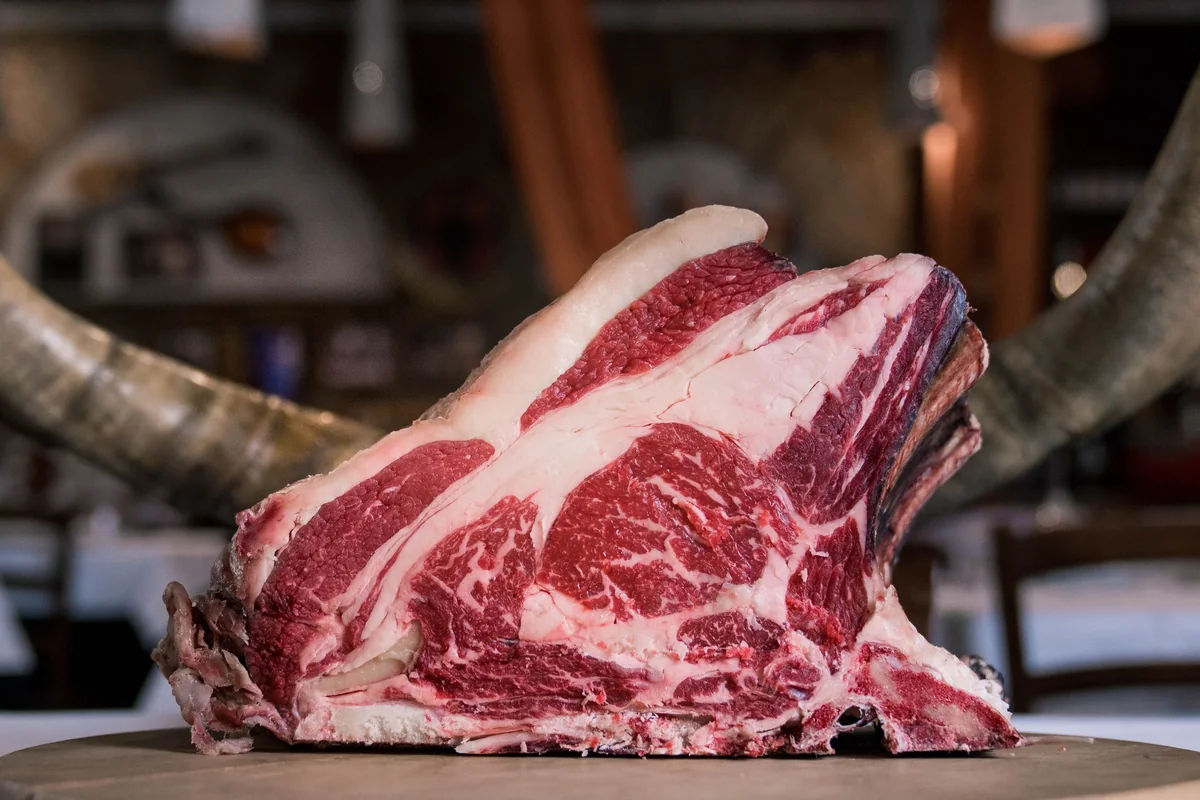
The first job of dietary fat is the obvious one. It is dense fuel. A pouch or a strip of fatty meat carries more than twice the energy of the same weight of lean. For anyone walking, paddling, or sitting in a maimai before dawn, that density matters.
Fat also carries the fat-soluble vitamins A, D, E and K, and the body needs dietary fat to absorb them well.[11] Animal fats and organs have long been a practical source of some of these.
On fullness, the picture is more mixed than the internet usually admits. In ordinary mixed diets, protein is often found to be the most filling of the three energy nutrients. Fat’s advantage is different: a little of it goes a long way. Some reviews of very low-carbohydrate, ketogenic diets have found a modest effect on hunger, mainly in that appetite does not rise the way it often does when people cut energy. That is a small, qualified finding, not a promise.[12]
When carbohydrate intake is very low, the liver can make ketone bodies from fat. In a classic 1967 study of prolonged fasting, those ketones became a major fuel for the brain, which had been thought to rely almost entirely on glucose.[13] People who eat this way for a while often talk about becoming “fat-adapted,” meaning the body gets better at burning fat for everyday energy. That is a real metabolic shift, not evidence that ketones cure anything, or that everyone should eat this way.
Why we look for it
A taste for fat is not a modern accident. One line of research argues that long before our ancestors were regular hunters of large animals, they may have scavenged marrow from bones left by other predators, smashing them with rocks. Marrow is a sealed, calorie-rich store of fat. Jessica Thompson and colleagues have suggested that this taste for marrow and brain fat, rather than lean muscle alone, may have been an early step in the human use of large animals. It is a hypothesis, not a settled origin story, but it fits a simple point: wild lean meat is a costly way to get energy.[14]
The habit is old in the archaeological record as well. In 2025, researchers reported that Neanderthals at a site in Germany, about 125,000 years ago, were processing the bones of large mammals on a large scale to extract marrow and bone grease, a kind of fat factory tens of thousands of years earlier than the oldest known grease-rendering by modern humans.[15][16]
We can see the same preference in living predators, if we are careful not to over-tell it. Wild polar bears in the Chukchi Sea have been estimated to eat diets made up largely of marine-mammal blubber. Because fat is so energy-dense, that worked out at about 81 to 83 percent of their metabolisable energy from fat, and only 17 to 19 percent from protein. Zoo polar bears given a choice also chose high-fat, lower-protein diets, though not quite as fatty as the wild ones.[17] Not every carnivore eats this way. Cats, for example, are built around a higher-protein diet. The honest version is not that every predator eats fat first. It is that several large meat-eaters, and a long line of human hunters, have treated fat as the prize.
What we can and cannot say
The evidence has limits, and they should be said out loud. The Bellevue study had two subjects, both experienced Arctic travellers, and support for the wider meat-diet work included funding from a meat-industry body.[3] Rabbit starvation is well attested as a field observation, but it has not been tested in a modern clinical trial, and the exact mechanism is still argued. Traditional diets varied by season, place and trade goods. A single anecdote about blood tests is not evidence. None of this shows that a very high-fat diet is the right choice for every person, or that it treats or prevents disease.
What it does show is simpler. Protein and fat are not rivals. Protein does the building. Fat is the dense fuel that makes an all-meat, or mostly-meat, meal work. When the fat is missing, people have long reported hunger, weakness and illness, even with meat in front of them. When it is present, in the old pemmican bags and in the blubber and marrow that hunters sought, the same foods become something you can travel on.
That is still the idea behind a New Zealand grass-fed beef-and-tallow pemmican packed as fuel for a long day on the hill, a hunting trip, or a tramp. Credit belongs with the Indigenous peoples of the Plains, including the Cree, who worked the method out first. A modern take honours those principles; it is not an exact recreation. The lesson in the recipe is the same as it always was. Don’t leave the fat behind.
References
- Stefansson, V. The Fat of the Land. New York: Macmillan, 1956 (and later editions). The rabbit-starvation passage is widely quoted from this work and from Stefansson’s earlier Arctic writings; a closely matching account is also cited from Stefansson, 1944, in Speth and Spielmann (reference 6). A representative extract is discussed at: https://alexleaf.com/does-an-upper-limit-to-protein-intake-exist/
- McClellan, W. S., and Du Bois, E. F. “Clinical calorimetry. XLV. Prolonged meat diets with a study of kidney function and ketosis.” Journal of Biological Chemistry 87, no. 3 (1930): 651–668. https://www.jbc.org/article/S0021-9258(18)76842-7/pdf
- Lieb, C. W. “The effects on human beings of a twelve months’ exclusive meat diet: based on intensive clinical and laboratory studies on two Arctic explorers living under average conditions in a New York climate.” Journal of the American Medical Association 93, no. 1 (1929): 20–22. PDF: https://gwern.net/doc/biology/1929-lieb.pdf
- Rudman, D., DiFulco, T. J., Galambos, J. T., Smith, R. B., Salam, A. A., and Warren, W. D. “Maximal rates of excretion and synthesis of urea in normal and cirrhotic subjects.” Journal of Clinical Investigation 52, no. 9 (1973): 2241–2249. https://www.jci.org/articles/view/107408
- Bilsborough, S., and Mann, N. “A review of issues of dietary protein intake in humans.” International Journal of Sport Nutrition and Exercise Metabolism 16, no. 2 (2006): 129–152. https://doi.org/10.1123/ijsnem.16.2.129
- Speth, J. D., and Spielmann, K. A. “Energy source, protein metabolism, and hunter-gatherer subsistence strategies.” Journal of Anthropological Archaeology 2, no. 1 (1983): 1–31. https://doi.org/10.1016/0278-4165(83)90006-5
- Foster, J. E., updated by Baird, D. “Pemmican.” The Canadian Encyclopedia, 7 February 2006, last edited 4 March 2015. https://thecanadianencyclopedia.ca/en/article/pemmican
- Merriam, W. B. “The role of pemmican in the Canadian Northwest fur trade.” Yearbook of the Association of Pacific Coast Geographers 17 (1955): 34–38. https://doi.org/10.1353/pcg.1955.0000
- Food and Agriculture Organization of the United Nations. Food Energy: Methods of Analysis and Conversion Factors. FAO Food and Nutrition Paper 77. Rome: FAO, 2003. See the Atwater general factors: 9.0 kcal/g for fat, 4.0 kcal/g for protein and carbohydrate. https://www.fao.org/uploads/media/FAO_2003_Food_Energy_02.pdf
- Mullie, P., Deliens, T., and Clarys, P. “East-Greenland traditional nutrition: a reanalysis of the Inuit energy balance and the macronutrient consumption from the Høygaard nutritional data (1936–1937).” International Journal of Circumpolar Health 80, no. 1 (2021): 1932184. https://doi.org/10.1080/22423982.2021.1932184
- National Institutes of Health, Office of Dietary Supplements. “Vitamin A and Carotenoids: Fact Sheet for Health Professionals.” Updated 10 March 2025. https://ods.od.nih.gov/factsheets/VitaminA-HealthProfessional/. See also National Academy of Sciences, “Fat-Soluble Vitamins,” in Recommended Dietary Allowances, 10th ed. (Washington, DC: National Academies Press, 1989), https://www.ncbi.nlm.nih.gov/books/NBK234920/
- Gibson, A. A., Seimon, R. V., Lee, C. M. Y., Ayre, J., Franklin, J., Markovic, T. P., Caterson, I. D., and Sainsbury, A. “Do ketogenic diets really suppress appetite? A systematic review and meta-analysis.” Obesity Reviews 16, no. 1 (2015): 64–76. https://pubmed.ncbi.nlm.nih.gov/25402637/
- Owen, O. E., Morgan, A. P., Kemp, H. G., Sullivan, J. M., Herrera, M. G., and Cahill, G. F., Jr. “Brain metabolism during fasting.” Journal of Clinical Investigation 46, no. 10 (1967): 1589–1595. https://www.jci.org/articles/view/105650
- Thompson, J. C., Carvalho, S., Marean, C. W., and Alemseged, Z. “Origins of the human predatory pattern: the transition to large-animal exploitation by early hominins.” Current Anthropology 60, no. 1 (2019). https://doi.org/10.1086/701477. Yale News summary: https://news.yale.edu/2019/02/05/taste-fat-may-have-made-us-human-says-study
- Kindler, L., et al. “Large-scale processing of within-bone nutrients by Neanderthals, 125,000 years ago.” Science Advances 11 (2025): eadv1257. https://doi.org/10.1126/sciadv.adv1257
- Kavanagh, K. “Neanderthals boiled bones in ‘fat factories’ to enrich their lean diet.” Nature, 3 July 2025. https://www.nature.com/articles/d41586-025-02104-w
- Rode, K. D., Robbins, C. T., Stricker, C. A., Taras, B. D., and Tollefson, T. N. “Energetic and health effects of protein overconsumption constrain dietary adaptation in an apex predator.” Scientific Reports 11 (2021): 14172. https://www.nature.com/articles/s41598-021-94917-8
Not medical advice. This article is general information only and does not replace advice from your doctor or dietitian, especially if you have a medical condition, take medication, are pregnant or are under 18. Read our full medical disclaimer.