
Blog
Ruminant meat vs chicken and pork on a carnivore diet: a practical guide
Beef, lamb, goat, venison and bison compared with chicken and pork: what ruminants are, fat-to-protein ratios, linoleic acid figures from USDA data, budget tips and how people fit poultry, pork, eggs and fish in. Not medical advice.
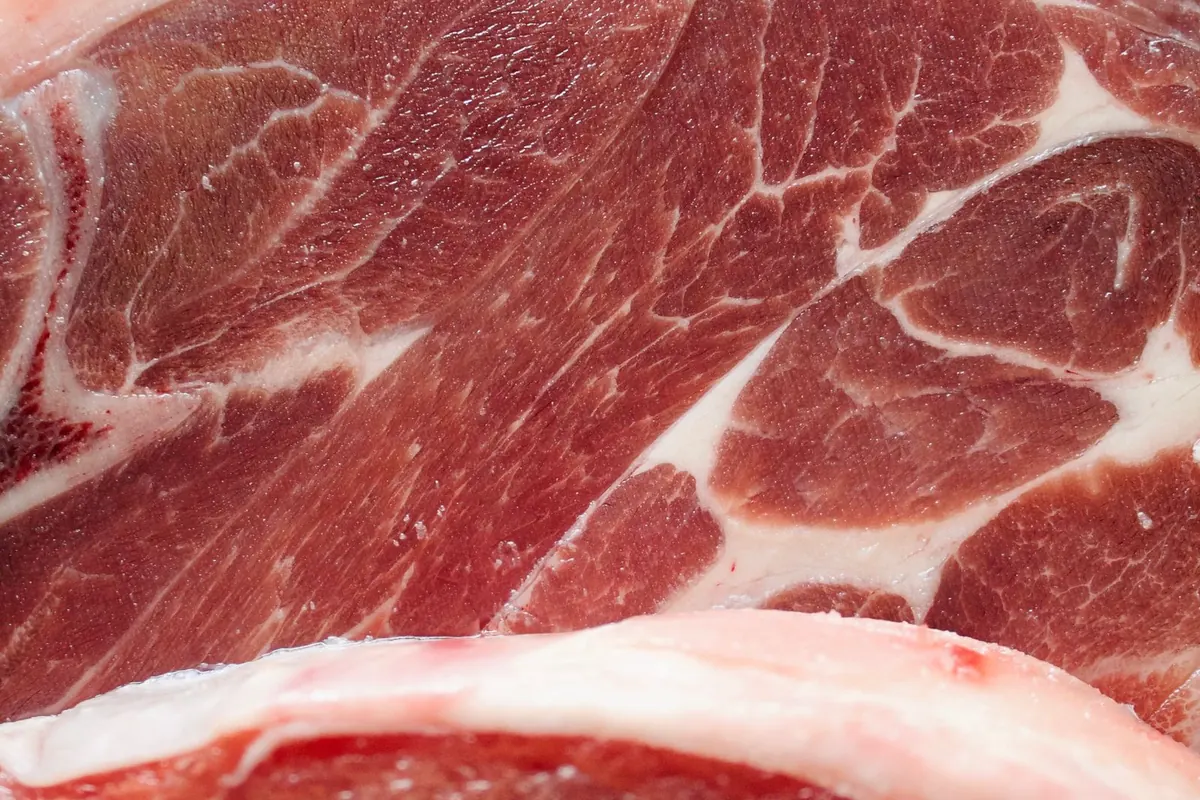
Spend a week reading carnivore forums and two questions come up again and again: why does everyone eat so much beef? and is chicken OK on carnivore? The short answer is that chicken and pork are meat, and plenty of carnivore eaters include them. The longer answer is about fat: how much there is, and what kind. That is where ruminant animals such as cattle and sheep differ from chickens and pigs.
This guide lays out the differences with real numbers from the USDA, then gets practical: cost, budget swaps, and how people who eat pork, chicken, eggs and fish fit them in. If you are new to this way of eating, the beginner’s guide and carnivore food list are good places to start first.
What is a ruminant?
Ruminants are grazing animals with a multi-chambered stomach. The first and largest chamber, the rumen, works like a fermentation vat: microbes break down grass and other plant material before the animal digests it further. Animals people commonly eat in this group include:
- Cattle (beef and veal)
- Sheep (lamb and mutton)
- Goats
- Deer (venison), elk and other wild or farmed deer
- Bison (often sold as “buffalo” in the US)
Chickens, turkeys and pigs are monogastric: like us, they have a single simple stomach. That difference sounds like a textbook detail, but it shows up in the fat on your plate.
Why many carnivore eaters put beef and lamb first
Ask long-time carnivore eaters what they eat most and the answer is usually beef, with lamb close behind. The reasons people give tend to be practical rather than mysterious:
- Fat comes built in. Fatty beef and lamb cuts often land near a 1:1 fat-to-protein ratio by weight with no added butter or tallow. Lean poultry needs help.
- The fat is firmer and more saturated. Ruminant fat (think tallow, suet, the fat cap on a lamb shoulder) is solid at room temperature. Pork and chicken fat is softer, with more polyunsaturated fat, as the numbers below show.
- It is filling and easy to repeat. Ground beef and a few cheap cuts cover most meals with almost no planning.
Physician and podcaster Dr Anthony Chaffee ranks foods along these lines in his episode All Carnivore Foods Ranked (June 2026). He puts wild and grass-finished animals at the top, then pasture-raised pork, chicken and eggs, then grain-finished beef and lamb, then conventionally fed pork and chicken. He also ends on a pragmatic note, saying “you want to eat the meat that you can afford, that you enjoy, and that makes you feel the best.”
Dr Shawn Baker (@SBakerMD, a verified X account and author of The Carnivore Diet) shows how mixed real plates can be. In a post asking followers to rank a line-up of meats, he gave his own order as “Prime rib, ham, rack of lamb, salmon, turkey”: ruminants first, with pork, fish and poultry still on the list.
(We are summarising their public material. Neither has any connection with this site or endorses it.)
Fat and fat-to-protein ratios of common cuts
All figures below are for 100 grams (about 3.5 oz) of raw meat, taken from the USDA’s FoodData Central database. Each row links to the exact entry. Cooking changes the numbers (fat renders out, water is lost), so treat this as a comparison, not a label.
| Meat (USDA entry, raw) | Protein | Fat | Fat : protein | Calories |
|---|---|---|---|---|
| Ground beef, 80% lean / 20% fat | 17.2 g | 20.0 g | 1.2 : 1 | 254 |
| Ground lamb | 16.6 g | 23.4 g | 1.4 : 1 | 282 |
| Ground bison | 18.7 g | 15.9 g | 0.85 : 1 | 223 |
| Ground bison, grass-fed | 20.2 g | 7.2 g | 0.36 : 1 | 146 |
| Goat | 20.6 g | 2.3 g | 0.11 : 1 | 109 |
| Deer (venison) | 23.0 g | 2.4 g | 0.11 : 1 | 120 |
| Chicken thigh, meat and skin | 16.5 g | 16.6 g | 1.0 : 1 | 221 |
| Chicken breast, skinless | 22.5 g | 2.6 g | 0.12 : 1 | 120 |
| Ground pork | 16.9 g | 21.2 g | 1.3 : 1 | 263 |
| Pork belly | 9.3 g | 53.0 g | 5.7 : 1 | 518 |
A few things stand out:
- “Ruminant” does not automatically mean “fatty”. Goat and venison are as lean as skinless chicken breast. Wild and farmed game usually needs added fat, just like poultry.
- Chicken thigh with skin is close to 1:1. If chicken is on your menu, thighs and drumsticks with the skin on behave very differently from breast.
- Pork ranges widely. Ground pork sits near ground beef. Pork belly is mostly fat.
For what those ratios mean in calories per day, see our fat-to-protein ratio guide.
The fat itself: linoleic acid and what the animal ate
This is the part most “is chicken OK on carnivore” debates are really about. Linoleic acid (LA) is the main omega-6 polyunsaturated fatty acid (PUFA) in the food supply. Corn and soybeans, the backbone of most commercial chicken and pig feed, are rich in it.
The animal’s digestion matters here. In a ruminant, rumen microbes convert (hydrogenate) much of the unsaturated fat in the feed into saturated fat before it is absorbed, so beef and lamb fat stays fairly saturated even when the animal eats grain. A pig or a chicken has no rumen, so more of the fat in its feed ends up in its own fat largely unchanged. That is why “you are what you eat” applies to monogastric animals more than to cattle and sheep.
Here is the linoleic acid content from the same USDA entries, plus the two classic cooking fats:
| Food (USDA entry, raw) | Linoleic acid (g per 100 g / 3.5 oz) | Linoleic acid as a share of total fat |
|---|---|---|
| Ground beef, 80/20 | 0.42 g | about 2% |
| Ground lamb | 1.36 g | about 6% |
| Ground lamb, imported from New Zealand | 0.31 g | about 2.5% |
| Ground bison | 0.58 g | about 4% |
| Goat | 0.10 g | about 4% |
| Deer (venison) | 0.31 g | about 13% |
| Chicken thigh, meat and skin | 3.10 g | about 19% |
| Chicken breast, skinless | 0.32 g | about 12% |
| Ground pork | 1.67 g | about 8% |
| Pork belly | 5.03 g | about 9.5% |
| Beef tallow | 3.1 g | about 3% |
| Lard (pork fat) | 10.2 g | about 10% |
The “share of total fat” column is simple division (linoleic acid ÷ total fat) using the USDA’s own values, rounded.
How to read it:
- Grams matter more than percentages for lean meat. Venison and chicken breast have a high percentage because they have so little fat overall; most of it sits in cell membranes, which are naturally richer in PUFA. In actual grams, they are both low.
- The big differences are in fatty poultry and pork. 100 g of chicken thigh with skin carries roughly seven times the linoleic acid of the same weight of 80/20 ground beef. Lard has around three times as much as tallow.
- Feed shows up in the data. The USDA’s two ground lamb entries differ: the New Zealand import (typically pasture-raised) comes in lower than the general entry. Pork raised on pasture or on lower-PUFA feed is often marketed with fatty-acid claims too; if that matters to you, ask the farmer what the pigs are fed.
None of this makes chicken or pork “off limits”. It is simply the reason many people make ruminant meat the base and treat fattier poultry and pork as a regular side rather than the main event. How much any of it matters for you personally is a question for your doctor or dietitian, not a blog table.
So, is chicken OK on carnivore?
Chicken is an animal food, so by any definition of the diet it qualifies. In practice, people who eat it tend to follow a few simple habits:
- Pick the fattier parts. Thighs, drumsticks and wings with skin keep meals satisfying. Breast is very lean and usually needs butter, tallow or a fatty side.
- Cook it in ruminant fat. Roasting chicken in tallow or butter instead of seed oils is a common swap.
- Use it for variety, not as the whole week. A rotisserie chicken mid-week or wings on the weekend is a typical pattern.
- Watch the seasoning. Supermarket rotisserie chickens and marinated cuts often include sugar, starches or seed oils. Read the label, or buy plain and season with salt yourself.
How people fit in pork, eggs and fish
- Pork: Bacon, pork belly, shoulder (pork butt) and chops are all popular, partly because they are often cheaper than beef. Check bacon and sausage labels for sugar and fillers. Rendering your own lard is easy, but many people keep tallow or butter as their everyday cooking fat.
- Eggs: A cheap, quick protein and fat source that many carnivore eaters use daily. Pasture-raised eggs cost more; the budget supermarket guide covers where eggs fit when money is tight.
- Fish and seafood: Salmon, sardines, mackerel and shellfish add variety. Oily fish are a common way people add omega-3 fats, which is the point Dr Chaffee makes for anyone eating mostly grain-finished beef.
A simple weekly shape many people use: ruminant meat at most meals, eggs most days, fish once or twice, and chicken or pork as a change of pace.
Cost and budget tips
Here is how US prices compare, using the US Bureau of Labor Statistics city-average retail prices for October 2026:
| Item (US city average, Oct 2026) | Price per lb | Price per kg (converted) |
|---|---|---|
| Ground beef, 100% beef | $6.76 | about $14.89 |
| Beef for stew, boneless | $8.67 | about $19.12 |
| Sirloin steak, USDA Choice, boneless | $13.85 | about $30.53 |
| Chicken, fresh, whole | $2.03 | about $4.47 |
| Chicken breast, boneless | $4.10 | about $9.04 |
| Bacon, sliced | $6.69 | about $14.74 |
| Eggs, grade A large | $2.32 per dozen | n/a |
Prices vary a lot by region, store and season, so use these as a rough guide. Chicken and eggs are clearly cheaper per pound, which is exactly why they appeal on a budget. Ways to keep ruminant meat affordable:
- Ground beef and ground lamb are the workhorses. Buy in bulk packs and freeze in meal-sized portions.
- Choose slow-cook cuts. Chuck, brisket, short rib, shanks and lamb shoulder cost less than steaks and come with plenty of fat.
- Buy in bulk from a farm. A share of a whole animal often brings the average price per pound down. Our guide to buying a quarter or half cow explains hanging weight, freezer space and cut sheets.
- Ask for fat trim and suet. Butchers often sell beef fat cheaply. Render it into tallow to turn lean, cheaper cuts (or chicken) into fattier meals.
- Mix, don’t switch. If beef at every meal stretches the budget, eggs plus chicken thighs plus ground beef is a common middle ground.
Quick comparison: ruminant vs monogastric meat
| Ruminant (beef, lamb, goat, venison, bison) | Monogastric (chicken, pork) | |
|---|---|---|
| Stomach | Multi-chambered, with a rumen | Single, simple stomach |
| Typical fat on common cuts | High on beef and lamb; low on goat and venison | Low on chicken breast; moderate on thigh with skin; high on pork belly |
| Fat texture | Firm (tallow, suet) | Softer (lard, chicken fat) |
| Linoleic acid in the fat (USDA) | About 2–6% on beef, lamb and bison | About 8–19% on pork and chicken thigh |
| How feed affects the fat | Less, because rumen microbes saturate much of it | More, because dietary fat passes into body fat more directly |
| US cost | Higher per lb | Lower per lb |
| How many carnivore eaters use it | Main staple | Variety, budget meals, convenience |
Where to buy
For ruminant meat, game and cooking fat, the Carnivore Directory lists checked suppliers. In the US, examples include US Wellness Meats, Force of Nature, White Oak Pastures, Porter Road and Crowd Cow; for tallow and other rendered fats, see Fatworks. Listings are information only, not endorsements, so check each supplier’s current range and shipping.
Browse by country in our where-to-buy hubs for the United States, United Kingdom, Australia and New Zealand, or start from the main buying guide. For snacks built on beef and other meats, see 30 carnivore snack ideas, and for a full week of meals, the 7-day meal plan.
Not medical advice. This article is general information only and does not replace advice from your doctor or dietitian, especially if you have a medical condition, take medication, are pregnant or are under 18. Read our full medical disclaimer.